Agriculture Marketplace India
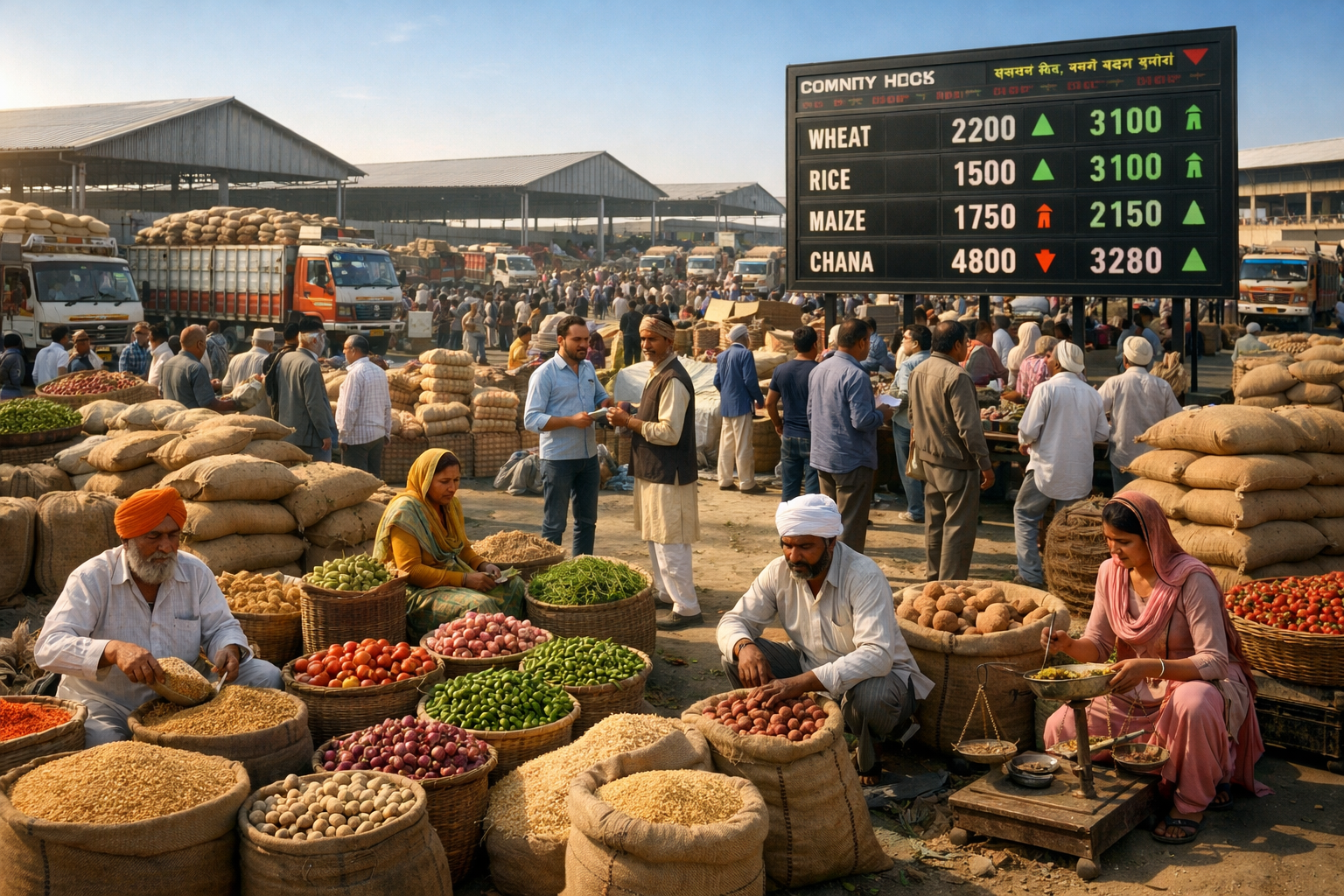
The agriculture marketplace in India forms the backbone of the rural economy and feeds over a billion people. From small village mandis to national digital trading platforms, India’s agricultural trade system is one of the largest and most complex in the world. It connects millions of farmers with traders, processors, exporters, and consumers, shaping both farm income and national food security.
What is an Agriculture Marketplace?
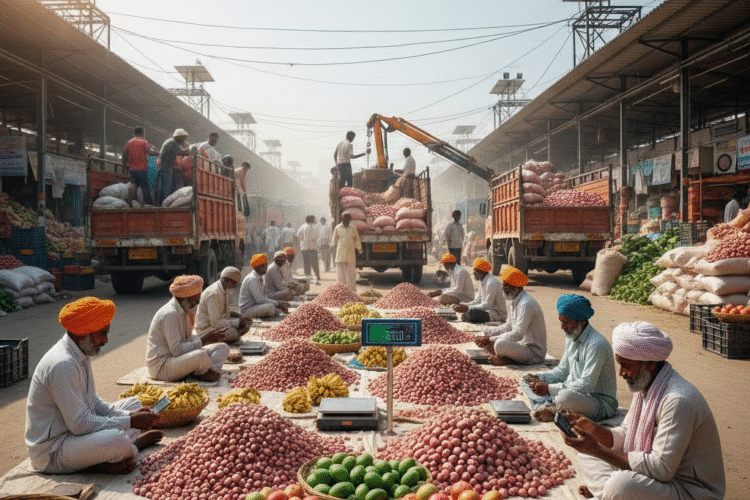
An agriculture marketplace refers to the ecosystem where agricultural commodities are traded. It includes:
- Physical mandis
- Wholesale markets
- Retail markets
- Export hubs
- Digital platforms
- Farmer cooperatives
These marketplaces ensure the movement of crops from farms to consumers through structured trading mechanisms.
Traditional Market Structure
Historically, India’s agriculture marketplace has been governed by APMC mandis established by state governments. These mandis provided:
- Regulated auctions
- Standard weights and measures
- Trader licensing
- Market fees
The system aimed to protect farmers from exploitation. However, over time, inefficiencies emerged due to:
- Excessive market charges
- Cartelization
- Limited buyer participation
- Poor infrastructure
This created a need for reform and modernization.
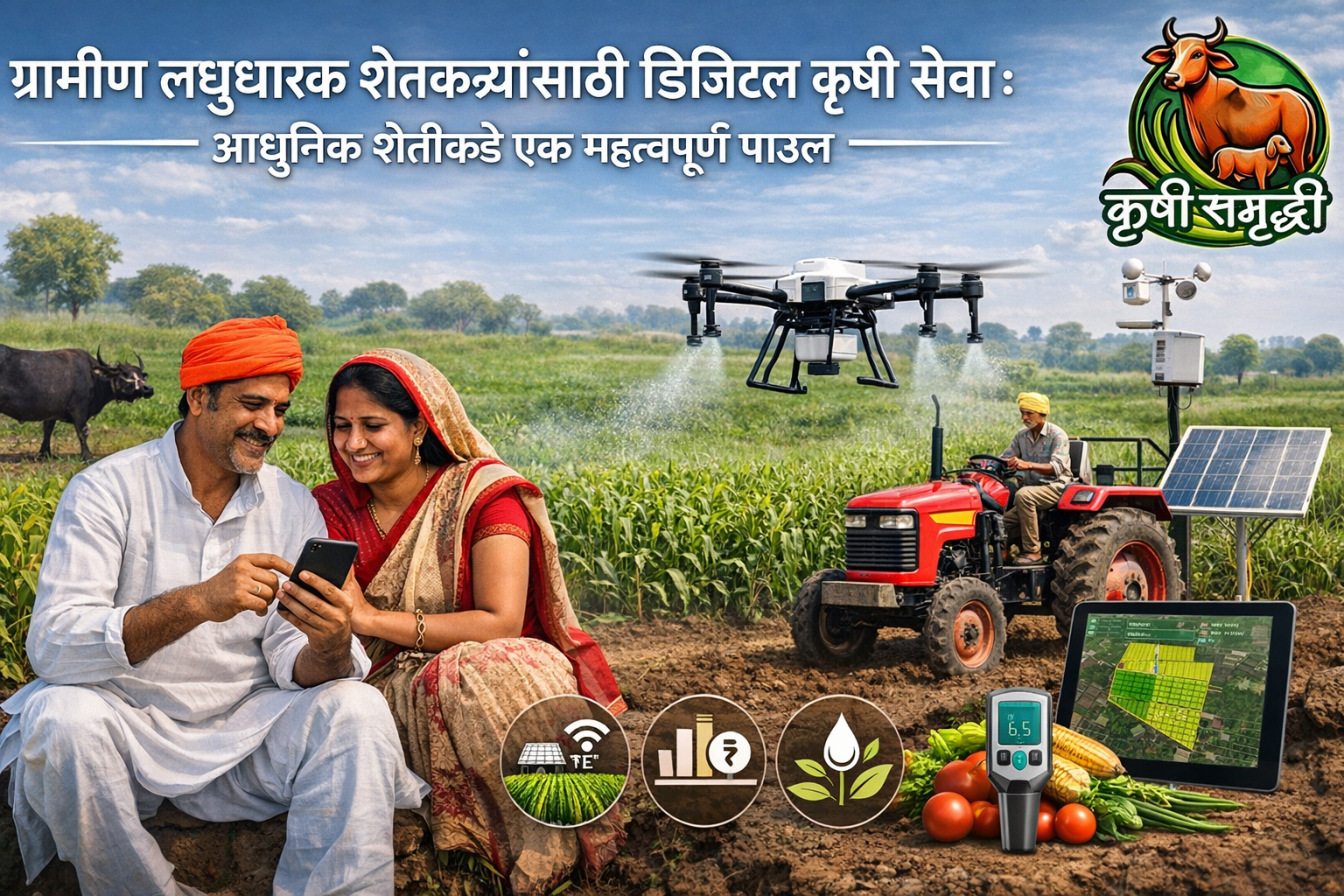
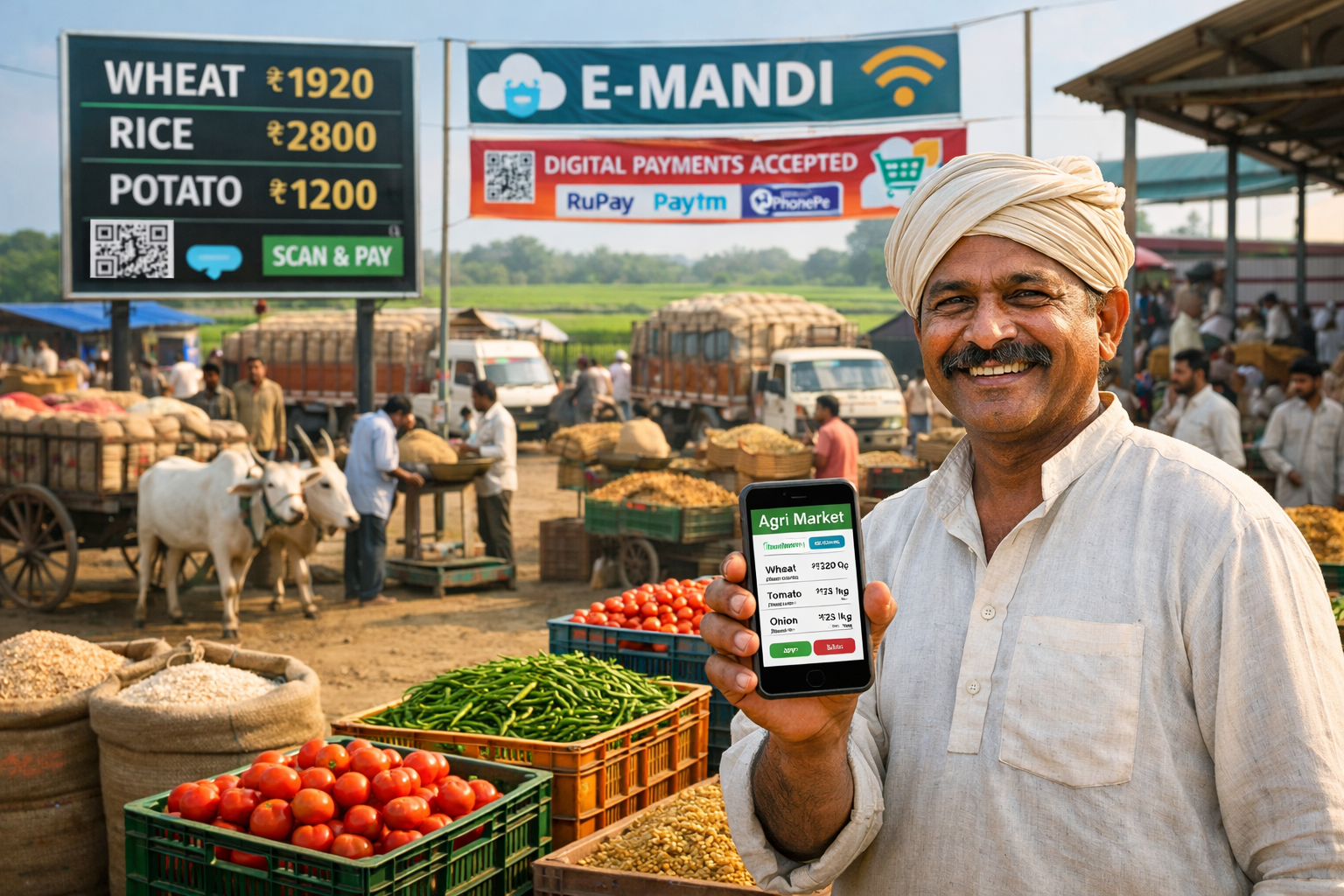
Digital Revolution in Agriculture Marketplace India
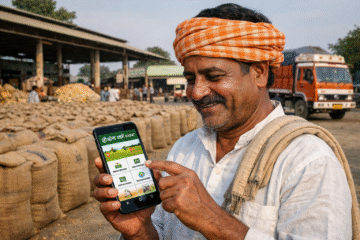
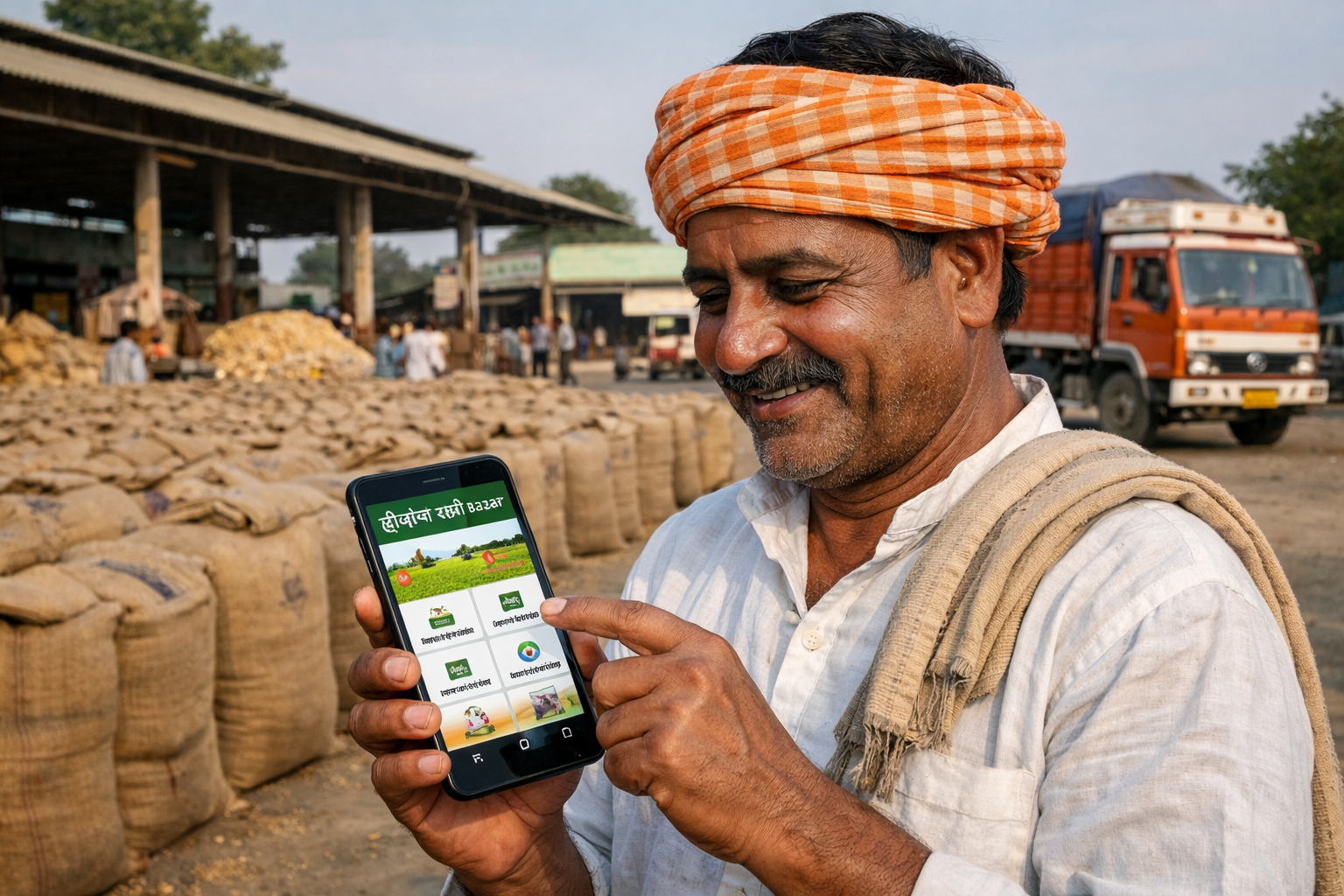
Technology has transformed agricultural trade in India. Digital platforms now allow farmers to:
- View real-time prices
- Sell to buyers across states
- Receive digital payments
- Track demand trends
E-market systems have connected thousands of mandis, enabling inter-state trade. Farmers can access national-level price discovery rather than depending on local traders.
Role of Policy Reforms
Reforms in agricultural marketing have encouraged:
- Private markets
- Contract farming
- Direct procurement
- Farmer collectives
- Warehousing-based trading
These changes aim to create a competitive and efficient marketplace where farmers can choose where to sell based on price and convenience.
Farmer Producer Organizations (FPOs)
FPOs are central to India’s agriculture marketplace transformation. They aggregate produce from multiple farmers and sell in bulk to:
- Food processors
- Exporters
- Retail chains
- Institutional buyers
FPOs reduce transaction costs and improve farmers’ negotiating power. They also help with:
- Quality standardization
- Packaging
- Logistics
- Access to finance
Infrastructure Development
A strong agriculture marketplace requires infrastructure such as:
- Cold chains
- Warehouses
- Sorting and grading centers
- Transportation networks
- Market yards
Government and private sector investments have improved storage and reduced post-harvest losses, especially for fruits and vegetables.
Commodity-Specific Market Systems
India’s agriculture marketplace operates differently for different crops:
Cereals: Procured by government agencies and traded in mandis.
Pulses: Sold through traders and FPOs.
Oilseeds: Used by processors and exporters.
Fruits and Vegetables: Traded through mandis, retail chains, and direct procurement.
Cash Crops: Cotton, tea, coffee, and sugarcane follow specialized marketing systems.
This diversity makes India’s marketplace resilient but complex.
Challenges in Agriculture Marketplace India
Key challenges include:
- Fragmented landholdings
- High transportation costs
- Climate variability
- Information gaps
- Price volatility
- Market dominance by intermediaries
Small farmers often lack bargaining power and depend heavily on local traders.
Opportunities for Growth
India’s agriculture marketplace has enormous growth potential due to:
- Rising food demand
- Export opportunities
- Food processing expansion
- Digital adoption
- Logistics startups
Future developments will include:
- AI-based demand forecasting
- Blockchain traceability
- Smart contracts
- Integrated supply chains
- Farmer-centric trading platforms
Role of Sustainability
Sustainable trading practices are becoming essential. Buyers increasingly demand:
- Traceable produce
- Quality certification
- Eco-friendly farming
- Ethical sourcing
India’s marketplace is adapting to meet global sustainability standards.
Conclusion
The agriculture marketplace India is evolving from a fragmented mandi-based system into a connected digital ecosystem. With reforms, infrastructure investment, and farmer organizations, India is building a transparent and competitive agricultural trade environment. This transformation will help farmers secure better incomes while ensuring consistent food supply for the nation.